
Mythology and Legends of Kamakhya
Myths and legends are repositories where important historical information and references are delicately hidden. Hence, these myths and legends can be sensibly used as a tool for unearthing and reconstructing historical truth. In this context, the Kamakhya Temples’ Complex is no exception. Numerous myths and legends related to the Shakti Peeth Kamakhya, which are still popular, can be found in different scriptures. Apart from these myths and legends, a sizable number of oral legends, folklore, narratives, etc., are also related to Kamakhya. Here are some important myths and legends from the scriptures as well as oral legends, folklore, and narratives associated with the Kamakhya Temples’ Complex
The legend of Sati and Shakti Peeth Kamakhya
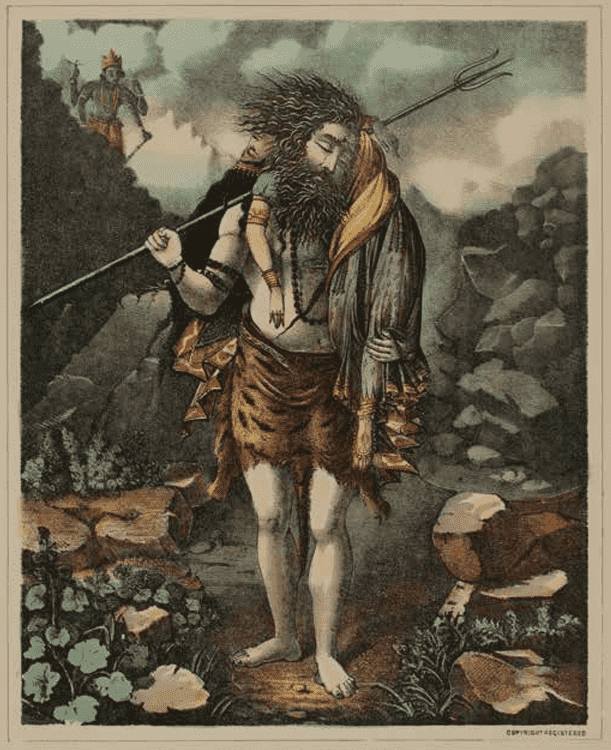
The Kamakhya Mandir is intricately linked with the mythological legend of Sati, the first wife of Lord Shiva, and her father Daksha. The legend has been elaborated in the Kalika Purana, and according to the myth, King Daksha organized a grand Yagya (fire sacrifice) and invited all the Gods and Kings from the Tribhuvana. As Daksha could not tolerate his daughter’s husband Shiva, he intentionally excluded Shiva and Sati. Sati came to know about the insult and urged Shiva to allow her to attend her father’s Yagya. When Shiva refused to let Sati attend the Yagya, she, in a rage, transformed herself into Goddess Kali. Witnessing this transformation, Shiva was forced to permit Sati to attend her father’s Yagya.At the Yagya, Daksha humiliated Sati by using insulting words in front of the crowd. Unable to bear the insult to her husband, Sati self-immolated in the sacrificial fire. Shiva came to know about the incident, arrived at the palace of Daksha, and destroyed the Yagya. Shiva was enraged and, in his grief, carried Sati’s body on his shoulder and began roaming around the universe in Tandava (cosmic dance of destruction). To quell Shiva’s Tandava and save the universe from impending apocalypse, in consultation with Brahma, Vishnu intervened, and with the divine Sudarshana Chakra, severed Sati’s body into 51 pieces. These pieces fell on the earth, transforming into Shakti Peethas. These Peethas are scattered across the Indian subcontinent.
Sati’s Yoni (vulva) fell at the site of the Kamakhya Temple, transforming the entire site into a Yonimandala, making it one of the most significant and vibrant Shakti Peethas.
The legend of Kamadeva and construction of the Kamakhya Mandir
Gripped by intense grief over the self-immolation of his consort Sati in the sacrificial fire of her father Daksha, Lord Shiva alienated himself from all activities and entered a state of meditative mourning. Due to this, the creative process of the universe came to a halt, causing great alarm and concern among all the Gods. The Gods then devised a plan to resolve this situation and sent Kamadeva (a Cupid) to awaken Lord Shiva from his meditative mourning so that he could re-engage in the passion of creation.
At the disturbance caused by Kamadeva during his meditation, Lord Shiva became furious and burnt Kamadeva to ashes with the angry glance of his third eye. Shocked by the consequence, Rati, the wife of Kamadeva, prayed to Lord Shiva to bring back Kamadeva to life. Satisfied with Rati’s prayer, Lord Shiva restored Kamadeva to life with all his original grace and beauty. However, Lord Shiva set a condition: if Kamadeva and Rati could erect a temple on Nilachala (Kamakhya) where the Yoni of Sati had fallen, only then would he restore Kamadeva’s life. Rati readily agreed. After Kamadeva regained his life, following the promise made by Rati, Kamadeva erected the Kamakhya Temple with the help of the celestial architect Visvakarma on the Yoni of Sati on Nilachala (Kamakhya).
Thus, from this mythological legend, we learn that the original temple of Kamakhya surrounding the Yoni was built by Kamadeva with the help of Biswakarma. This temple has become a symbol of great veneration and is regarded as a source of divine power and influence. According to scriptures, the Kamakhya Temple built by Kamadeva was covered in stone sculpted images of the sixty-four Yoginis and eighteen Bhairavas.
Though there is no historical evidence or basis for this mythological legend concerning the origin of the structure of the Kamakhya Temple, we can assume that the temple is of great antiquity. Interestingly, as symbolic evidence of the event, a statue of Biswakarma is still present in front of the northern gate of the Kamakhya Temple. Furthermore, a temple dedicated to Biswakarma, where regular worship is performed, is also present in the southern part of the foothills of Kamakhya (near the stone pathway).
The legend of Naraka and Maa Kamakhya
Naraka holds a prominent place in the pre-historic period of Pragjyotishpura (later known as Kamarupa and then Assam). Naraka appears in the Ramayana as the lord of Pragjyotispura and a friend of King Ravana. In the Mahabharata, he is depicted as a Danava, the son of Danu. The Kaurava prince Duryodhana married Bhanumati, the daughter of Naraka’s son Bhagadatta, and he was an ally of the Kauravas in the Kurukshetra War.
Naraka ruled Pragjyotishpura. He was a good ruler and strictly adhered to the injunctions of his father and worshipped Devi Kamakhya very devotedly. Devi Kamakhya was satisfied with Naraka’s dedication and one day appeared before him. Seeing her unparalleled beauty and charm, Naraka was captivated and proposed to marry her. Instead of becoming enraged, the goddess agreed, but with a condition. If Naraka could construct a temple, a tank, and a masonry road (stone pathway) from the foot of the hill on the western side of Kamakhya near the banks of the river Brahmaputra to the top of Kamakhya Hill within a single night before dawn, only then would she marry him. With his strong desire to marry the beautiful goddess, Naraka accepted the challenge and immediately began the task. As he was about to complete the construction, the goddess made a cock crow, signalling the break of dawn. This signalled the end of Naraka’s time, and thus Devi Kamakhya refused to marry him.
Historical evidence for the existence of Naraka is debated because the information related to him appears mostly in legends from scriptures like the Harivamsa, Kalika Purana, Yogini Tantra, Mahabharata, Ramayana, etc. However, as mentioned in the legend, the masonry road or stone pathway (said to be built by Naraka) from the foothill of Kamakhya on the western side near the banks of the river Brahmaputra to the top of Kamakhya Hill still exists.
The legend of Naraka, sage Vashistha and Kamakhya Temple
Naraka became very powerful with the blessings of Devi Kamakhya. Puffed by the power that he attained through his sincere and dedicated worship of Devi Kamakhya, Naraka became egoistic and arrogant. Gradually, he came under the influence of his friend King Bana of Sonitpur (present Tezpur) who was a dedicated Saivite. In his company, Naraka developed Asura (demonic) qualities and transformed into an arrogant, unkind, intolerant, and ill-mannered human being. In the meantime, the great sage Vasistha visited Nilachala (Kamakhya Hill) to worship Devi Kamakhya, but the arrogant Naraka denied entry into the temple to the sage. An enraged sage Vasistha cursed Naraka and declared that from then on, Devi Kamakhya would be worshipped according to the Vamachara (left-handed Tantra Marga) tradition, and she would disappear from his kingdom, leaving him diminished without her protection. Sage Vashistha even vowed to remain in Kamarupa until Naraka was destroyed and established an Ashram at Sandhyachala. Though it is difficult to establish the legend in the context of historical facts, the ashram established by Sage Vashistha in Sandhyachala still exists as “Vashistha Ashrama” in the Beltola area of Guwahati.
The legend of Priest Kendukalai, King Naranarayana and Devi Kamakhya
According to this legend, Devi Kamakhya transformed herself daily into a beautiful woman and danced in tune to the music of the chief priest Kendukalai, within the closed doors inside the garbhagriha of the Kamakhya Temple during the Aarati (evening prayer). The Koch king Naranayana, who used to patronize the temples, somehow came to know about this occurrence and, with a desire to witness the dancing Devi Kamakhya, requested the chief priest Kendukalai to make the necessary arrangements. The priest, being aware of the consequences of this endeavor, initially rejected the request of the king. But eventually, due to immense pressure from the king and in fear of being ousted as a priest, he finally accepted the request. Priest Kendukalai made a hole in the wall of the garbhagriha of the temple and instructed the king to peep through the hole from outside during the occurrence of the event.
On that day, as the king was about to peep through the hole, Devi Kamakhya immediately came to know about the mischievous plan of the priest and the king. Enraged by this treacherous act of the priest and the king, Devi Kamakhya beheaded Priest Kendukalai and also debarred the king from visiting the Kamakhya Temples’ Complex forever. Devi Kamakhya even warned the king that, along with him, all his relatives and future descendants must not visit the Kamakhya Temples’ Complex and if they did so, she cursed that the dynasty would vanish without a trace from the earth. To this day, descendants of the Koch royal family pass by the hill under the cover of umbrellas.
This legend provides information about the involvement of the Koch king Naranayana (1540–1587 CE) with the Kamakhya Temples’ Complex and thus justifies the fact that the king rebuilt the Kamakhya Temple during his reign in the 16th Century AD. Since then, no descendant of the Koch Dynasty visits the Kamakhya Temples’ Complex to this day.
Get in Touch with Us
For more information, direct assistance, guidance, and other services for visiting Kamakhya Temples Complex and the greater region of Kamrup.